


With Matrixify you can securely save your FTP/SFTP servers and their users so you do not need to fill in all details for each Import and Export. Pick the saved server and specify only the path to the file or folder, or type the full URL without the password.
To save your servers, head into Matrixify app -> Settings in your store.
Find Settings section Shopify Side menu for Matrixify app:
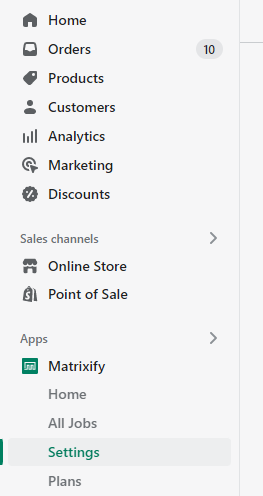
Scroll down to the “Servers” section of the page.
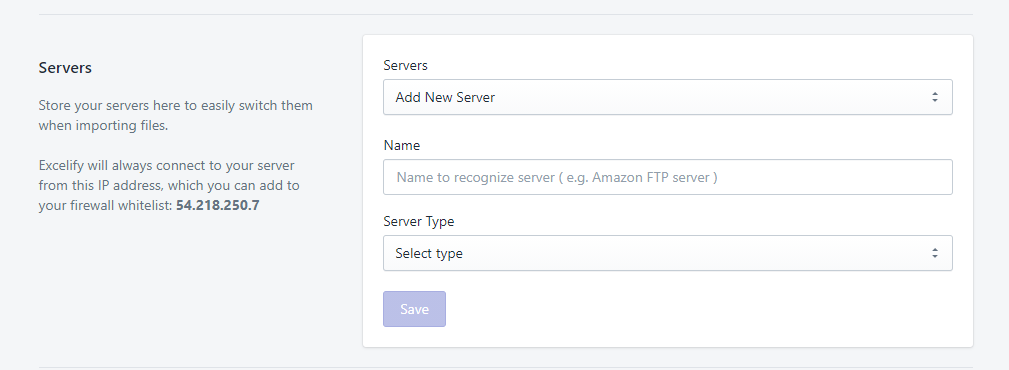
Servers – In this first drop-down you can select and edit existing servers or select “Add New Server” to create and save a new server.
Name – Give a name for each server so that you can recognize it when creating an import or export job. For example, if you have one server but with multiple users, then set up multiple servers with a different Name so that each user can select a server that has correct user credentials stored.
Server Type – Select what type of server this is, for example, FTP or SFTP. Each server type might have different fields needed to save the server.
FTP
When creating an FTP server connection, you would need to fill in the following details:
- Host – your servers address, for example, “ftp.my-data-server.com“
- Port – If using default port “21” then can be left empty, or you can specify a port number if needed
- User – username
- Password – password of that user
Matrixify also supports FTP over TLS – when import or export job runs at first we try to connect using TLS encryption. If it doesn’t succeed, then we try without the TLS.
SFTP
When setting up an SFTP server connection, you would need to fill in the following details:
- Host – your servers address, for example, “ftp.my-data-server.com“
- Port – If using default port “22” then can be left empty, or you can specify a port number if needed
- Authentication Method – You can select if the user will connect via “Password” or “Private Key“
Password
If using the password authentication method, then you need to specify the username in the “User” field and users password in “Password”
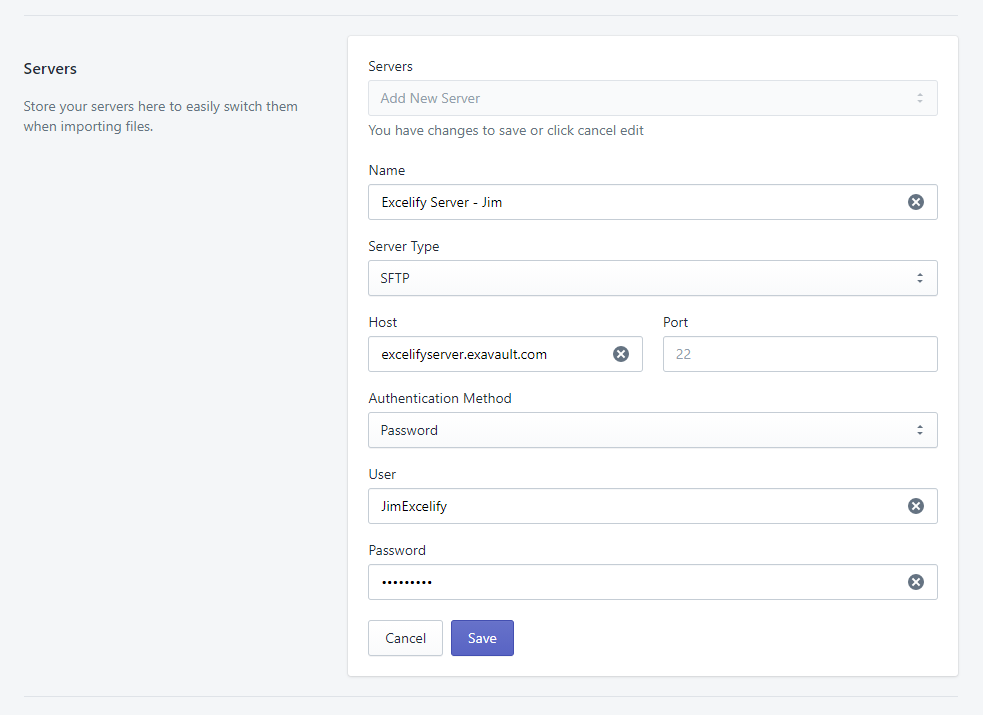
Private Key
You can also set up an SFTP server where the user uses a Private Key authentication.
In this authentication method, you need to specify the username in the “User” field.
Copy your user’s private key in the “Private Key” field so that the app can read and write files to the SFTP server.
Your Private Key is saved with us in an encrypted format.

Updating server details
You can also update your server details if they happen to change.
In the same Settings page, from the servers dropdown select the server for which you wish to update connection details.
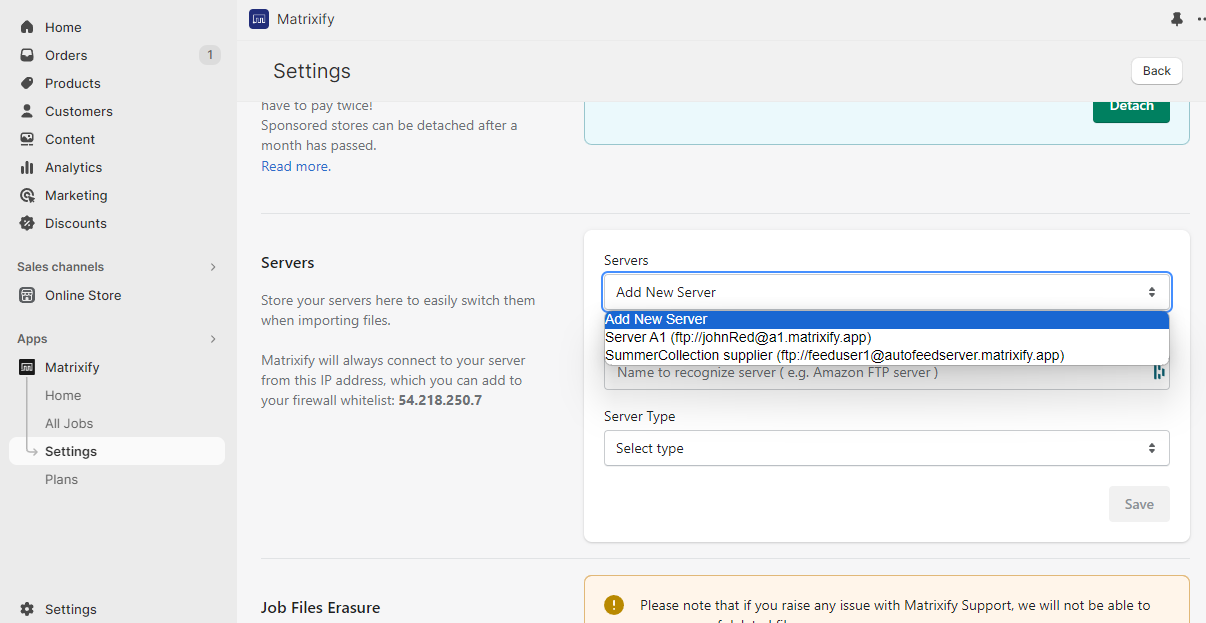
Change the fields that you need and press the Save button to save your changes.
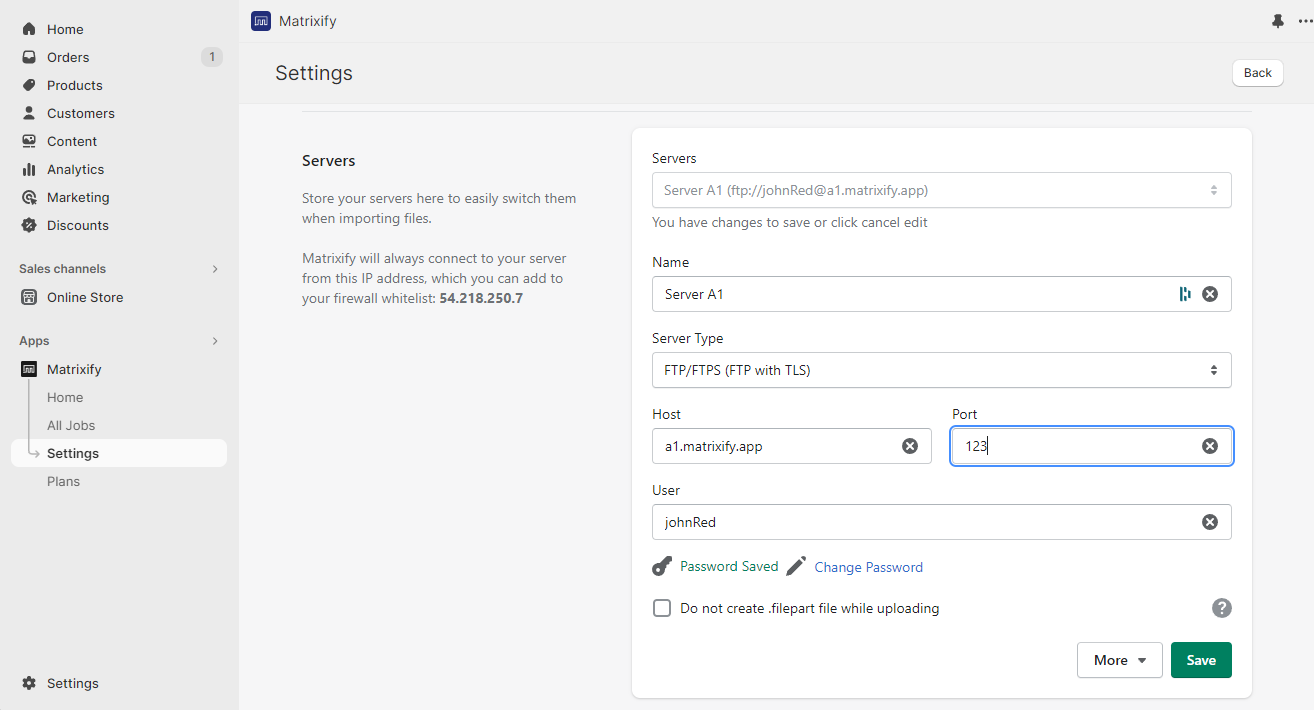
You can also update these details while your import/export jobs are running.
When Matrixify needs to connect to the server, it will dynamically take connection details from what is saved in the app settings.
Use an FTP/SFTP URL without the password
A saved server also works when you type a full URL instead of picking the server. Leave the password out of the URL, and Matrixify signs in with the server saved in Settings that has the same type, host and user:
sftp://[email protected]/data/Shopify-Import-Demo.xlsx
This works everywhere the app takes an FTP/SFTP URL: the Full URL field of a new Import, the Upload to option of an Export, the Upload Results file to option of an Import, the file links inside the imported sheet (Image Src of Products, Collections and Blog Posts, Link of Files), the file links of a batch Import, and a URL that an AI Agent gives over the Matrixify MCP.
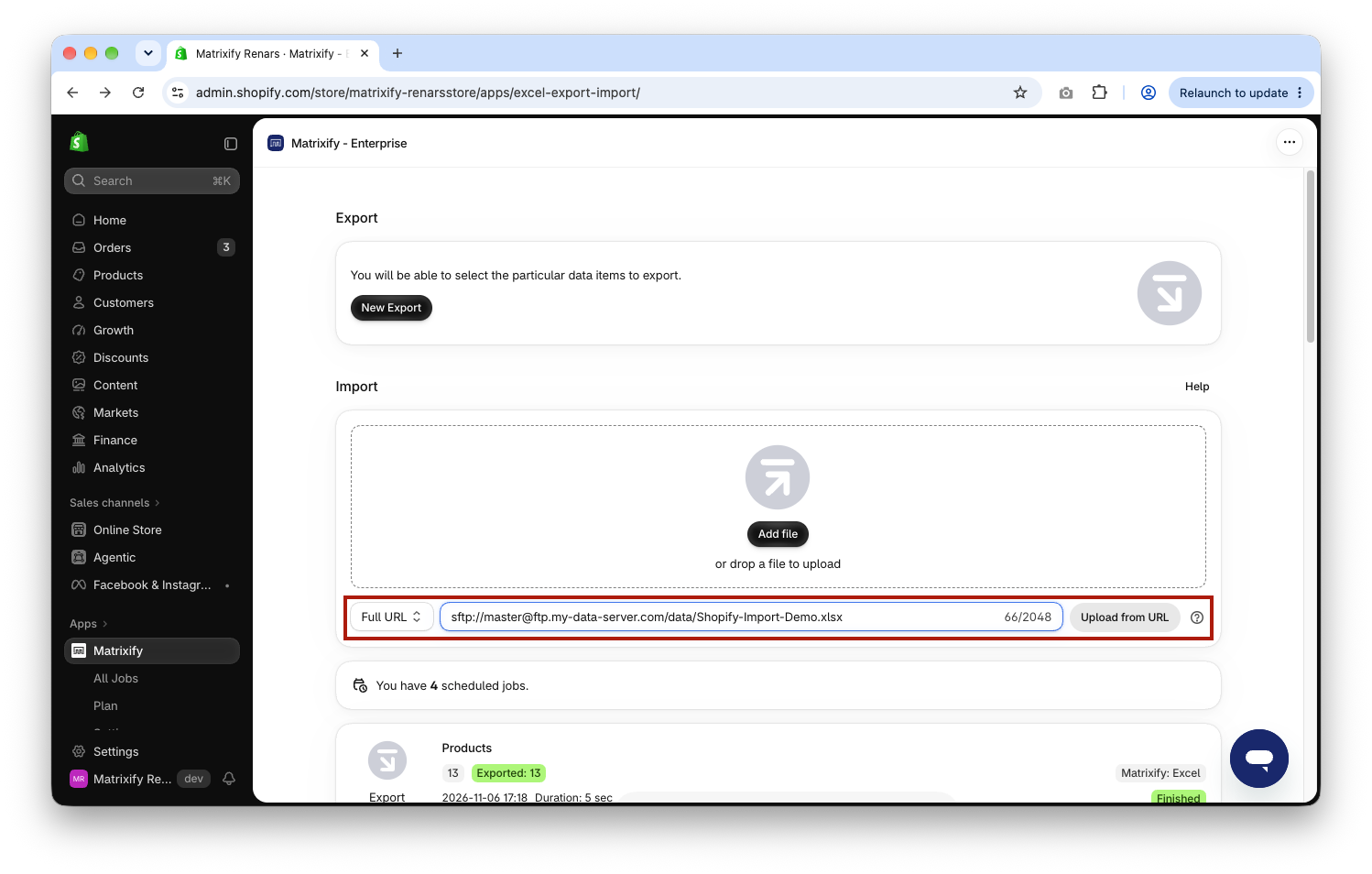
This is how the app finds the server:
- The server type, host and user must match. The server
Namedoes not matter. - A URL without a port matches the saved server whatever port it was saved with and connects to the saved port. A URL with a port, such as
sftp://[email protected]:2222/data/, matches only a server saved with that port. - The user can be left out too,
sftp://ftp.my-data-server.com/data/, when only one user of that host is saved. When several users of that host are saved, the app refuses the URL and asks for the user. - When the same user of the same host is saved twice under different names, the most recently saved server is used.
- A URL with a password still signs in with that password. A server picked in the drop-down with a path still signs in with the picked server. A full URL typed while a server is picked wins over the picked server.
The job keeps the URL as you typed it, without the password, and signs in again on every run. So when you change the password or the Private Key in Settings, the next run of a scheduled or repeated job uses the new one. You do not need to edit the job.
If no saved server matches the URL, the job is refused with “Authentication failed for user …” when it is created. Save the server in Settings first, or put the password in the URL.
Matrixify IP address for firewall whitelisting
The Matrixify app will always connect to your server from the IP address 54.218.250.7, which you can add to your firewall whitelist.
Good to know!
- Check out the Matrixify tutorials on how to import/export from your servers.
- You can always edit saved server details by going into Matrixify Settings -> Server section and selecting the server to edit.
- When generating your Private Key, for it to work in the app, it needs to be generated without a passphrase.
- By default – when uploading data to your server, app will first upload the file with an
.filepartextension and once upload is finished rename the file to the correct extension. This is needed so that file is not being taken and processed by your server-side scripts before the upload has finished. When setting up server, you can select checkboxDo not create .filepart file while uploadingto disable this feature and upload directly with the correct extension. - If the user is an e-mail address, write the “@” in the user as
%40in the URL, for examplesftp://master%[email protected]/data/. - The server must be reachable from the public internet. A host that is
localhostor that resolves to a private or internal address (10.x, 192.168.x, an internal IPv6 address) is refused before connecting withConnection failed - please, check the address!– also forUpload toand for the move and delete of an imported file.


